
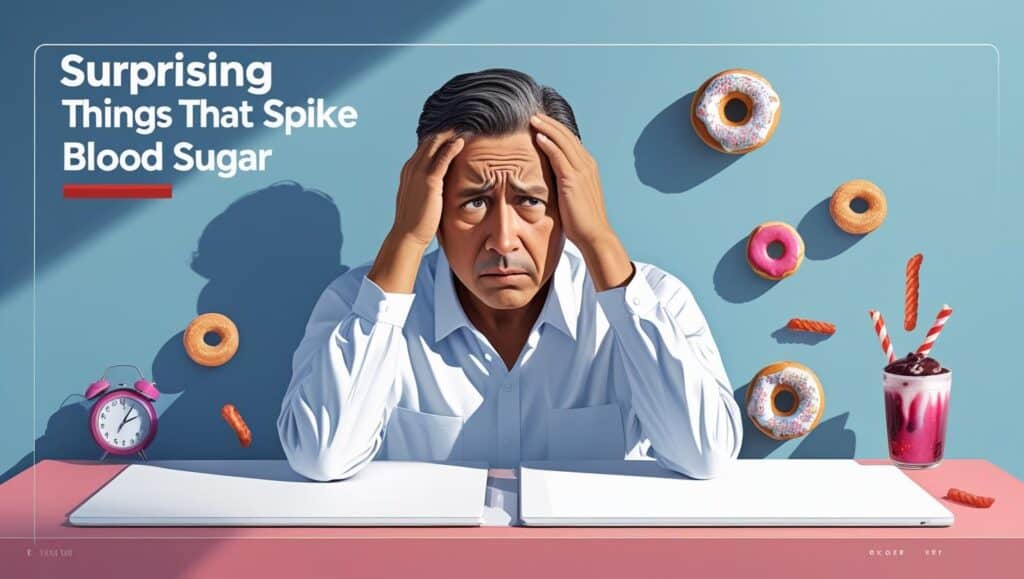
You might think sugar spikes come only from the plate—ice cream, bread, carbs, etc. But surprisingly, some non-food triggers can send your blood sugar soaring, sometimes even more than what you eat. Today, let’s dive into the unexpected culprits that can impact your glucose levels—even when your stomach is empty.
Here are the five surprising things that can spike your blood sugar—and simple strategies to keep them in check
1. Stress & Fear
When stress strikes—whether it’s a looming deadline, a tense commute, or a sudden fear—the body switches into “fight or flight” mode. This triggers the release of adrenaline and cortisol, prompting your liver to dump glucose into your bloodstream—even if you haven’t eaten. That’s why emotional stress can cause a bigger glucose spike than some meals.
Mini-story to bring it home
Take Ravi, for instance. Sitting in traffic, knowing he’s late for his presentation, his heart races. Without touching food, his glucose soars—all thanks to stress.
Quick tips to calm those spikes:
Deep breathing: A few slow breaths can calm those stress hormones.
Short walk: Movement helps burn off excess glucose.
Mind breaks: Reading, journaling, or meditating can reduce anxiety.
2. Caffeine on an Empty Stomach
That morning cup of coffee can do more than wake you up—it may also amplify your blood sugar response to your next meal, especially on an empty stomach.
Why it matters:
Caffeine can reduce insulin sensitivity, meaning your body needs more insulin to process glucose. So even a seemingly harmless sip can set up a bigger spike after breakfast.
What to do instead:
Add a protein-rich snack with your coffee—like nuts or yogurt.
Or try a latte with milk rather than black coffee.
3. Skipping Protein at Breakfast
Breakfast isn’t just the most important meal—it sets the tone for your entire day. Without enough protein, your blood sugar can swing wildly.
What happens:
Carbs alone cause quick rises and steep crashes. Protein, on the other hand, slows digestion and helps stabilize glucose.
Smart swaps:
Opt for eggs with whole-grain toast
Try Greek yogurt with berries and nuts
Smoothie with protein powder + fruit + oats
4. Not Enough Protein, Fat & Fiber in Meals
Balancing meals with protein, healthy fats, and fiber is crucial. Without them, even balanced meals can lead to unstable blood sugar.
Why it’s key:
Protein supports insulin response.
Fats slow digestion.
Fiber slows glucose absorption.
Easy meal tweaks:
Swap white rice for brown rice or quinoa
Add avocado or olive oil to salads
Choose whole fruit over fruit juice
5. Lack of Sleep
Sleep isn’t just rest—it’s glucose regulation 101. Waking up often or getting less than 7 hours, especially under 6.5 hours, can raise your insulin needs dramatically—by as much as 50%.
How less sleep affects sugar control:
Less REM sleep increases cortisol—hindering insulin function.
Sleep deprivation leads to cravings and poorer food choices.
Better sleep habits:
Aim for 7–8 hours nightly.
Set a calming bedtime routine—dim lights, no screens.
Keep your room cool, dark, and quiet.
Practical Takeaways
| Trigger | What to Watch For | Tip to Try |
|---|---|---|
| Stress & Fear | Glucose spikes even when fasting | Deep breathing, short walk |
| Caffeine (on empty) | Higher post-meal glucose peaks | Pair with protein or milk |
| Low Protein | Unstable sugars, energy crashes | Start with eggs, yogurt, oats |
| Low Fat/Fiber | Faster glucose absorption | Add healthy fats and fiber |
| Poor Sleep | High insulin demand & sugar swings | Prioritize 7–8 hours rest |
The bottom line: It’s not just what’s on your plate—but also what’s in your life—that shapes your blood sugar health.
Conclusion
Small lifestyle shifts can make a big difference in your blood sugar management. Being mindful of stress, caffeine, nutrition, and sleep can pave the way for smoother, healthier days.
If you’re navigating health challenges—from unstable glucose levels to pains or injuries—Physiocure in Ghatkopar West is here to help.
Led by Dr. Meeta Sharma, Chief Physiotherapist with 22 years of clinical experience across orthopedics, cardiopulmonary care, neurology, women’s health, oncology, geriatric care, ergonomics, and more physiocure.netphysiocure.net.
Alongside Dr. Ritesh Gohil, Associate Physiotherapist specializing in sports-related conditions, musculoskeletal recovery, personal fitness, and home care services physiocure.netphysiocure.net.
At Physiocure, they believe in a holistic approach—“Prevent, Repair, and Enhance (PRE)”—guiding you from healing through prevention & ongoing wellness physiocure.net.
So whether it’s blood sugar stabilization or body-wide health and mobility, Physiocure provides expert care and support at every step.
Feel free to ask if you want adjustments to tone, length, or to highlight anything else.